
Florence doesn’t rush anything. Not art. Not food. And definitely not coffee.
While Venice first brought coffee into Italy through its trade routes in the 1500s and 1600s, Florence quickly made it its own. By the 1700s, coffeehouses were part of everyday life in the city. These weren’t just places to grab a drink. They were meeting points for artists, intellectuals, and business owners. If ideas were shaping the future of Italy, chances are they were being discussed over a cup of coffee.
That foundation matters. Because in Florence, coffee was never just fuel. It was culture.
When Espresso Changed Everything

Fast forward to the late 19th and early 20th century. Italy introduces the espresso machine, and coffee shifts from something you linger over to something you experience in a single, concentrated moment.
Florence embraced espresso in a way that feels very Florentine. Quick, yes. But never careless.
The espresso bar became part of daily rhythm. You step in, greet the barista, drink your shot standing at the counter, exchange a few words, and move on. It’s efficient, but it’s also intentional. That balance shows up in the roasting style too. Florentine profiles tend to favor structure and smoothness over extreme bitterness. Rich, full-bodied, but not burnt.
It’s classic Italian coffee, done thoughtfully.
Mokaflor: Florence in a Roastery
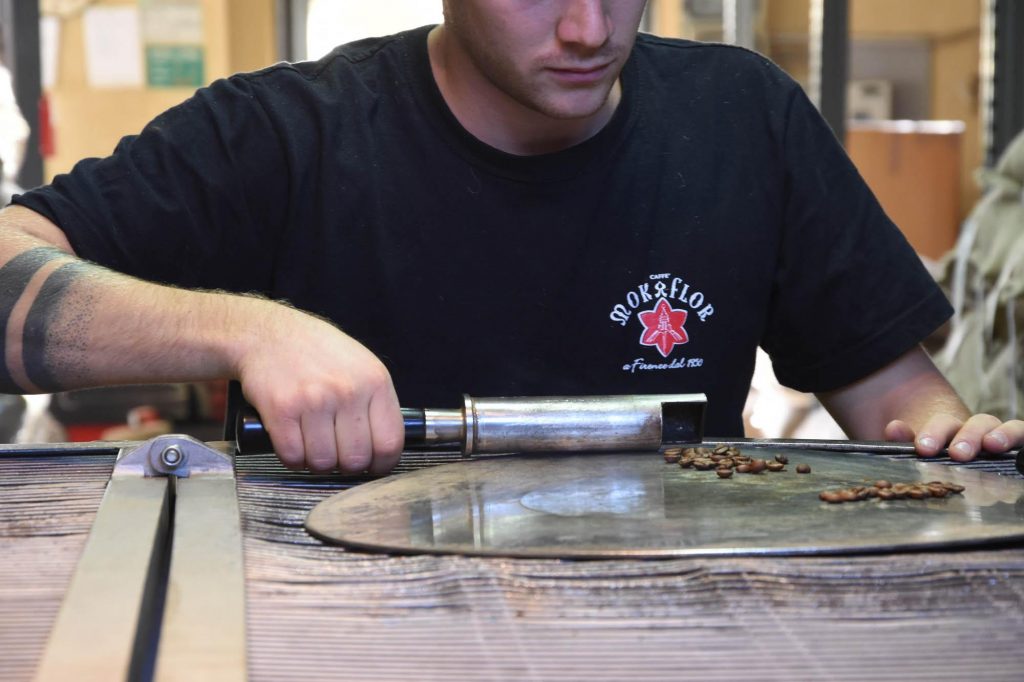
Founded in 1950, Mokaflor grew right out of that tradition. Still family-owned today, the company represents what we appreciate most about Florentine coffee culture: respect for heritage paired with a commitment to quality.
Mokaflor built its reputation on classic Italian espresso blends — balanced, consistent, built for crema and body. But unlike many traditional roasters who stayed locked into old formulas, Mokaflor evolved with the times. They invested in traceability. They developed relationships with producers. They embraced specialty coffee without abandoning their roots.
That’s not easy to do. It takes confidence to honor tradition while still pushing forward.
And that’s very Florence.
Why Florence Still Matters in Coffee
Cities like Naples and Trieste often get the spotlight in coffee conversations. But Florence has quietly maintained a standard that’s shaped Italian coffee for generations.
Here, coffee is not about trends. It’s about consistency. Craft. Daily ritual.
Walk into a Florentine bar today and you’ll still see locals taking their espresso standing up, just as they have for decades. At the same time, you’ll find specialty cafés exploring lighter profiles and new brewing methods. Both exist comfortably side by side.
That balance is the real story.
Florence doesn’t chase what’s next. It refines what works.
And roasters like Mokaflor prove that when you start with strong foundations, you don’t have to reinvent yourself every few years. You just keep getting better.
That’s Florentine coffee culture. Grounded. Skilled. Timeless.
Share:
The Legacy of Tuscan Pasta
Southern Intensity, Deep Tradition