
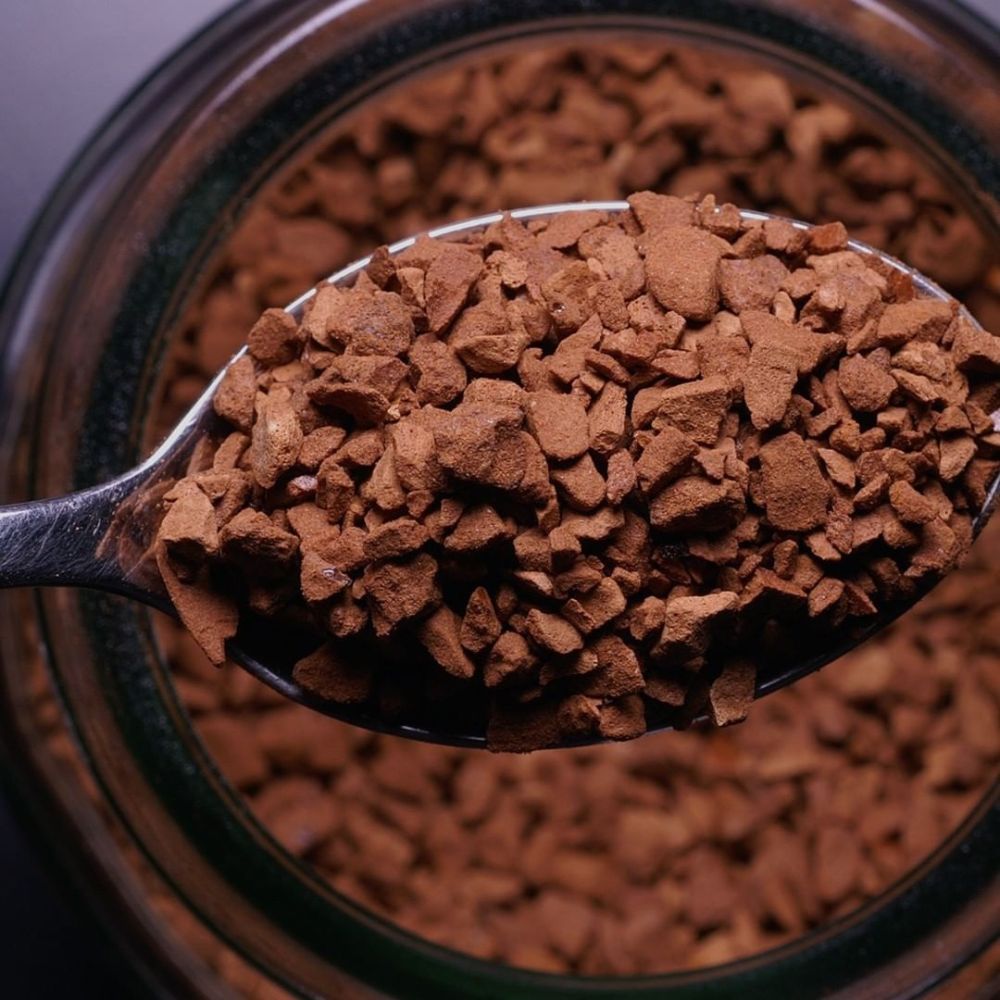

Instant coffee is often treated as a modern shortcut, but its origins go back more than a century. Long before it became a pantry staple, instant coffee was born out of scientific curiosity, global trade, and the need to make coffee portable, stable, and fast.
Like espresso, instant coffee didn’t appear by accident. It was a response to a problem.
Early Experiments: Coffee Without the Brew
The idea of soluble coffee emerged in the late 19th century, when inventors began asking a simple question: Could coffee be brewed once, then dried and reconstituted later?
In 1890, a New Zealand inventor named David Strang patented a process for making “soluble coffee” using hot, dry air. While Strang’s product never gained widespread popularity, his work marked one of the first serious attempts at instant coffee.
Around the same time, similar experiments were happening in Europe and the United States, driven by advances in food preservation and industrial drying techniques.
The First Commercial Instant Coffee
The breakthrough came in 1901, when Satori Kato, a Japanese-American chemist working in Chicago, developed a more refined soluble coffee powder. Kato had already experimented with instant tea, and he applied the same principles to coffee.
His version was more stable and easier to dissolve, and it gained attention at the 1901 Pan-American Exposition in Buffalo, New York. This is often cited as the first commercially viable instant coffee.
War, Shelf Life, and Mass Adoption
Instant coffee’s real rise had less to do with cafés and more to do with logistics.
During World War I, armies needed beverages that were:
-
Lightweight
-
Shelf-stable
-
Easy to prepare anywhere
Instant coffee fit perfectly. Soldiers became accustomed to it, and demand continued after the war ended.
Nestlé and the Coffee Crisis
The defining moment for instant coffee came in the 1930s, during a global coffee surplus caused by the Great Depression. Brazil, the world’s largest coffee producer, had massive excess stocks and needed a way to preserve coffee long-term.
The Brazilian government partnered with Nestlé, asking the company to create a coffee product that wouldn’t spoil. In 1938, Nestlé introduced Nescafé, made using spray-drying technology that preserved more aroma and flavor than earlier methods.
This changed everything.
Nescafé:
-
Had a long shelf life
-
Dissolved quickly in hot water
-
Could be mass-produced consistently
By World War II, Nescafé was included in military rations, introducing instant coffee to millions of soldiers worldwide.
Postwar Popularity and Cultural Shift

After WWII, instant coffee became a symbol of modern convenience. It aligned perfectly with postwar lifestyles focused on speed, efficiency, and home consumption.
In the U.S., Europe, and parts of Asia, instant coffee found a permanent place in kitchens. It wasn’t about ritual or craft; it was about accessibility.
Coffee no longer required equipment, time, or skill. Just hot water.
How Instant Coffee Is Made
Modern instant coffee starts as brewed coffee. That liquid is then dehydrated using one of two main methods:
-
Spray-drying: Coffee is sprayed into hot air, evaporating water quickly
-
Freeze-drying: Coffee is frozen, then dehydrated under vacuum for better flavor retention
The result is a soluble powder or granule that rehydrates instantly.
Instant Coffee Today
Today, instant coffee occupies a unique place in global coffee culture. While often dismissed in specialty circles, it dominates markets in parts of Asia, Eastern Europe, and the UK.
Modern versions have improved dramatically, with higher-quality beans and gentler processing methods. Some specialty roasters even produce premium instant coffee designed for travel and convenience without sacrificing flavor.
Why Instant Coffee Matters
Instant coffee democratized coffee.
It made coffee portable.
It made coffee global.
And it made coffee available anywhere there was hot water.
It may not carry the romance of espresso or pour-over, but instant coffee reshaped how the world drinks coffee — quietly, efficiently, and forever.
Share:
What Makes German Coffee Different From Everywhere Else?
Dalgona Coffee: When Instant Coffee Went Viral